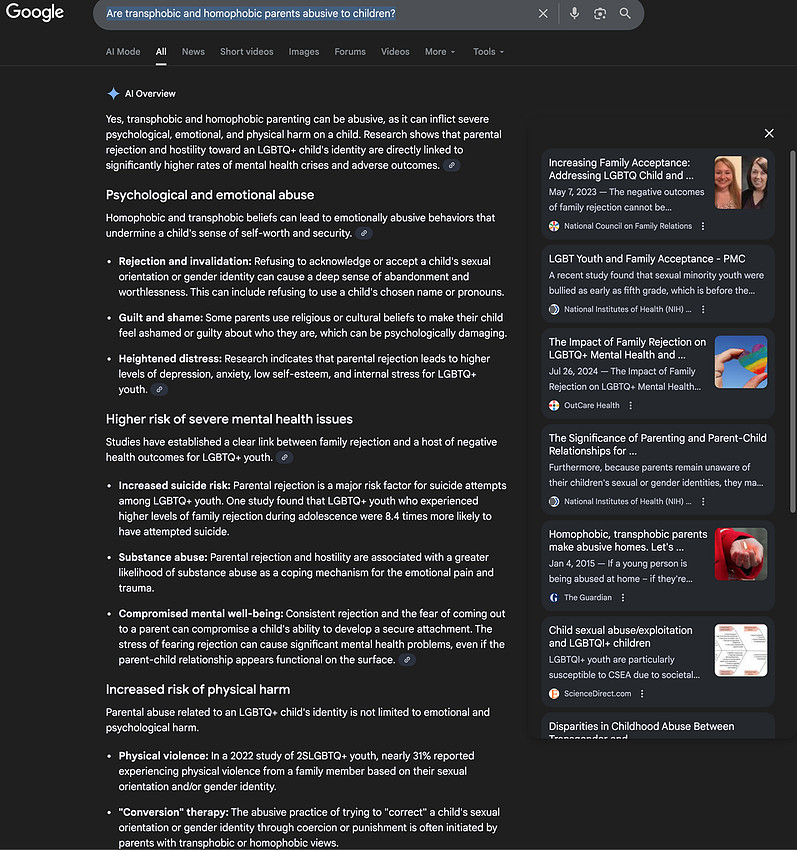
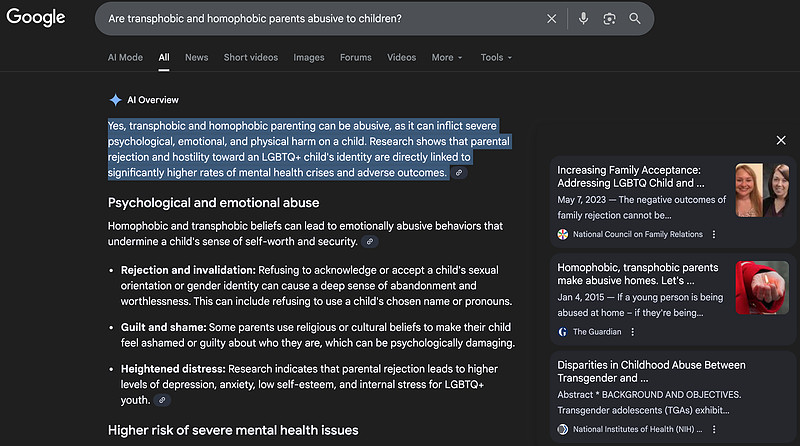
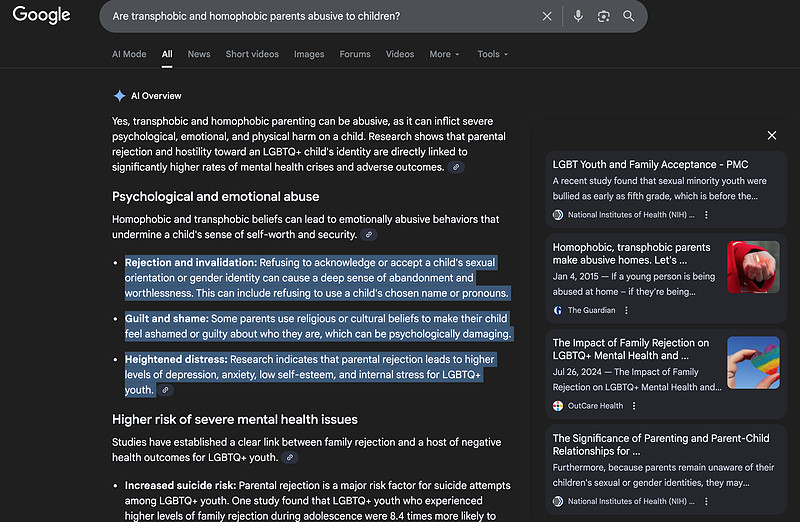
Yes, transphobic and homophobic parenting can be abusive, as it can inflict severe psychological, emotional, and physical harm on a child
. Research shows that parental rejection and hostility toward an LGBTQ+ child's identity are directly linked to significantly higher rates of mental health crises and adverse outcomes.
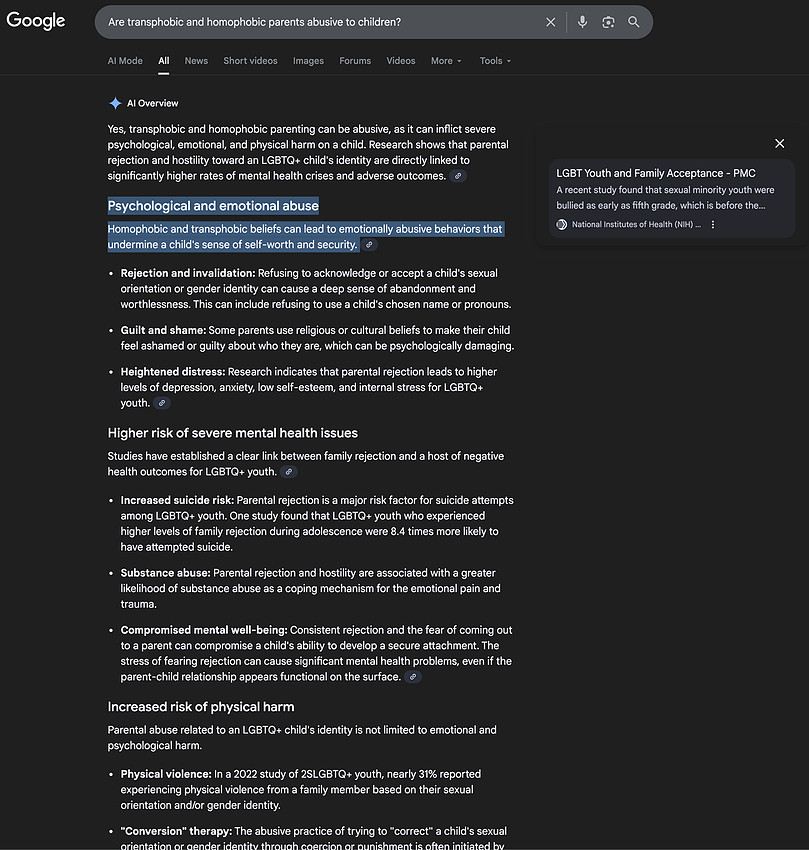
Psychological and emotional abuse
Homophobic and transphobic beliefs can lead to emotionally abusive behaviors that undermine a child's sense of self-worth and security.
Rejection and invalidation: Refusing to acknowledge or accept a child's sexual orientation or gender identity can cause a deep sense of abandonment and worthlessness. This can include refusing to use a child's chosen name or pronouns.
Guilt and shame: Some parents use religious or cultural beliefs to make their child feel ashamed or guilty about who they are, which can be psychologically damaging.
Heightened distress: Research indicates that parental rejection leads to higher levels of depression, anxiety, low self-esteem, and internal stress for LGBTQ+ youth.
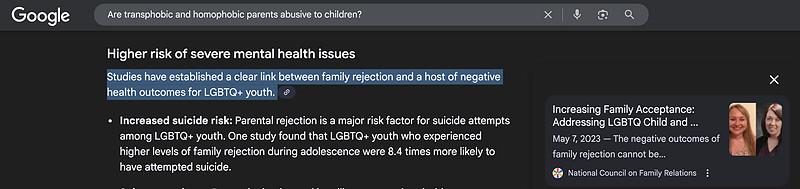
Higher risk of severe mental health issues
Studies have established a clear link between family rejection and a host of negative health outcomes for LGBTQ+ youth.
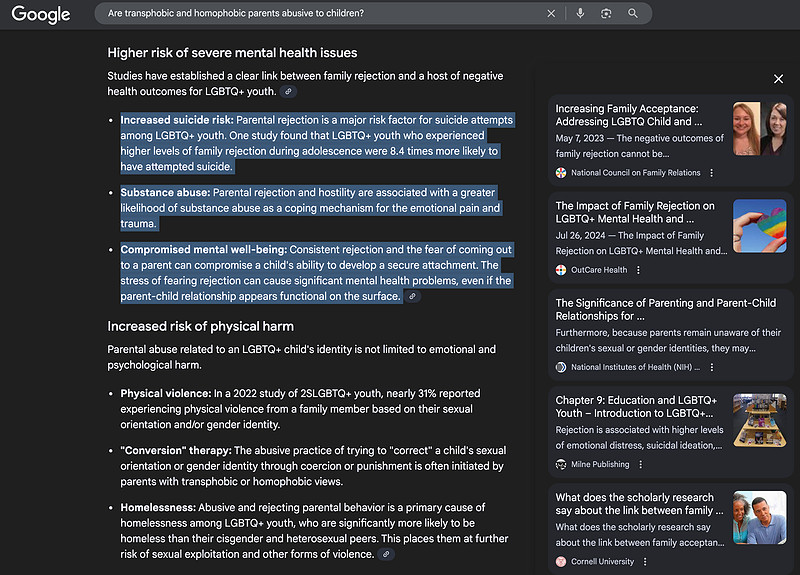
Increased suicide risk: Parental rejection is a major risk factor for suicide attempts among LGBTQ+ youth. One study found that LGBTQ+ youth who experienced higher levels of family rejection during adolescence were 8.4 times more likely to have attempted suicide.
Substance abuse: Parental rejection and hostility are associated with a greater likelihood of substance abuse as a coping mechanism for the emotional pain and trauma.
Compromised mental well-being: Consistent rejection and the fear of coming out to a parent can compromise a child's ability to develop a secure attachment. The stress of fearing rejection can cause significant mental health problems, even if the parent-child relationship appears functional on the surface.
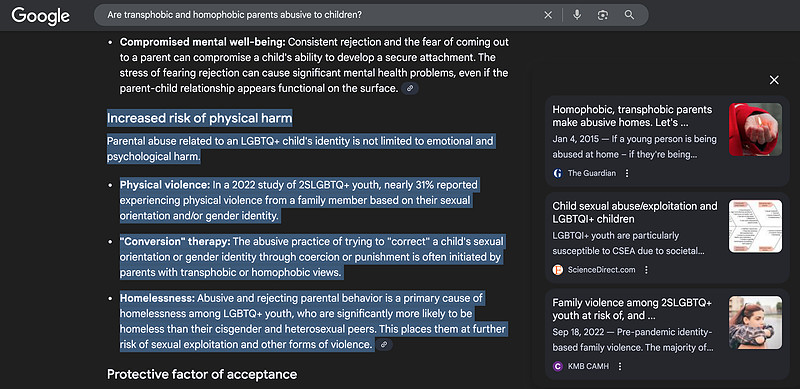
Increased risk of physical harm
Parental abuse related to an LGBTQ+ child's identity is not limited to emotional and psychological harm.
Physical violence: In a 2022 study of 2SLGBTQ+ youth, nearly 31% reported experiencing physical violence from a family member based on their sexual orientation and/or gender identity.
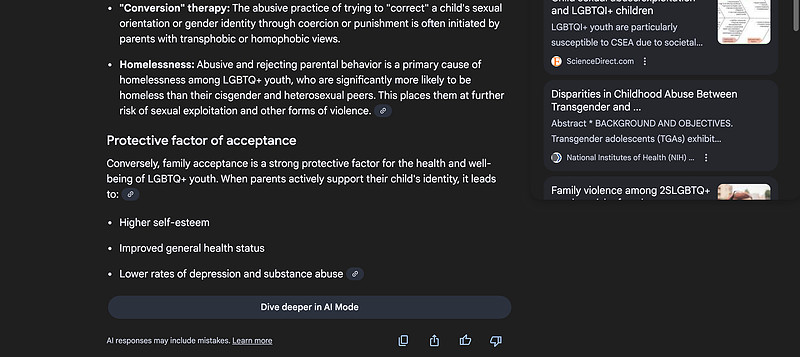
"Conversion" therapy: The abusive practice of trying to "correct" a child's sexual orientation or gender identity through coercion or punishment is often initiated by parents with transphobic or homophobic views.
Homelessness: Abusive and rejecting parental behavior is a primary cause of homelessness among LGBTQ+ youth, who are significantly more likely to be homeless than their cisgender and heterosexual peers. This places them at further risk of sexual exploitation and other forms of violence.
Protective factor of acceptance
Conversely, family acceptance is a strong protective factor for the health and well-being of LGBTQ+ youth. When parents actively support their child's identity, it leads to:
Higher self-esteem
Improved general health status
Lower rates of depression and substance abuse" - Google AI results