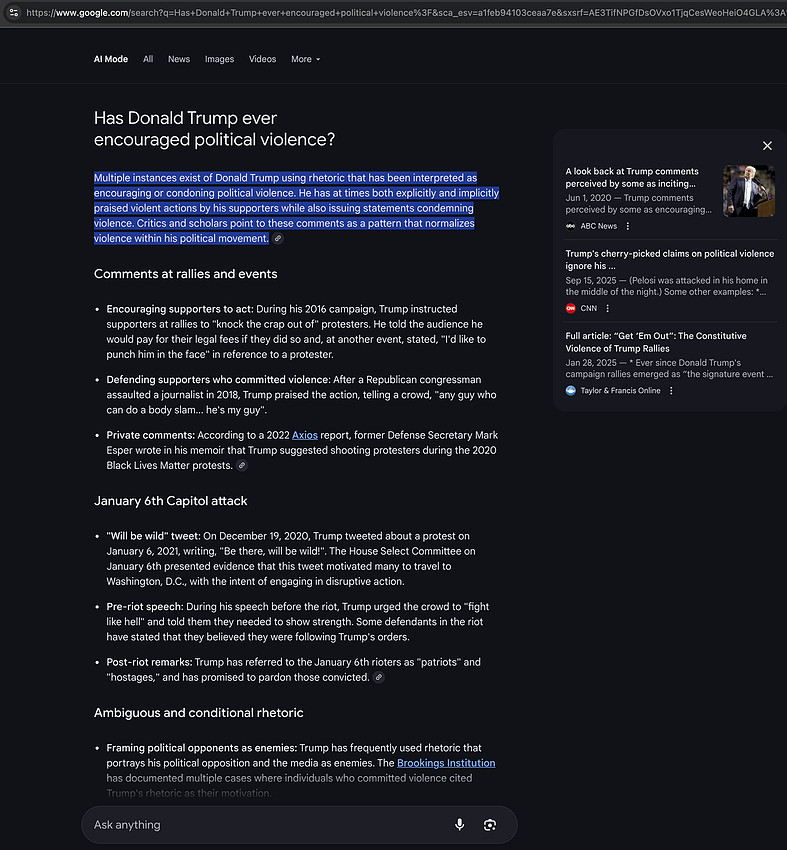
I asked Google AI "Has Donald Trump ever encouraged political violence?" twice. Here are the results highlighted in quotations along with screenshots and the sources shared by Google AI.
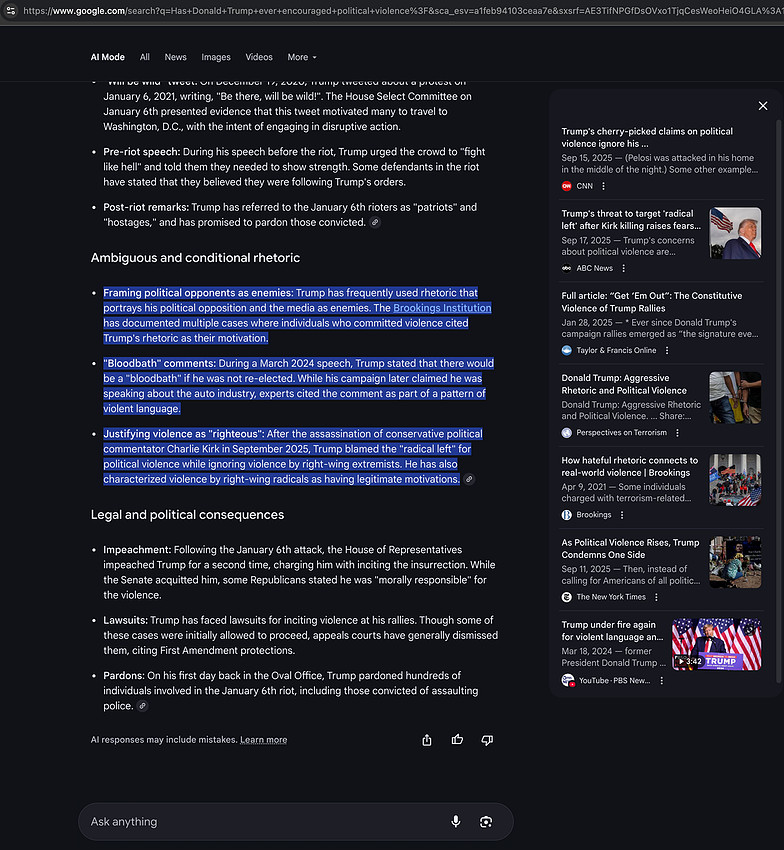
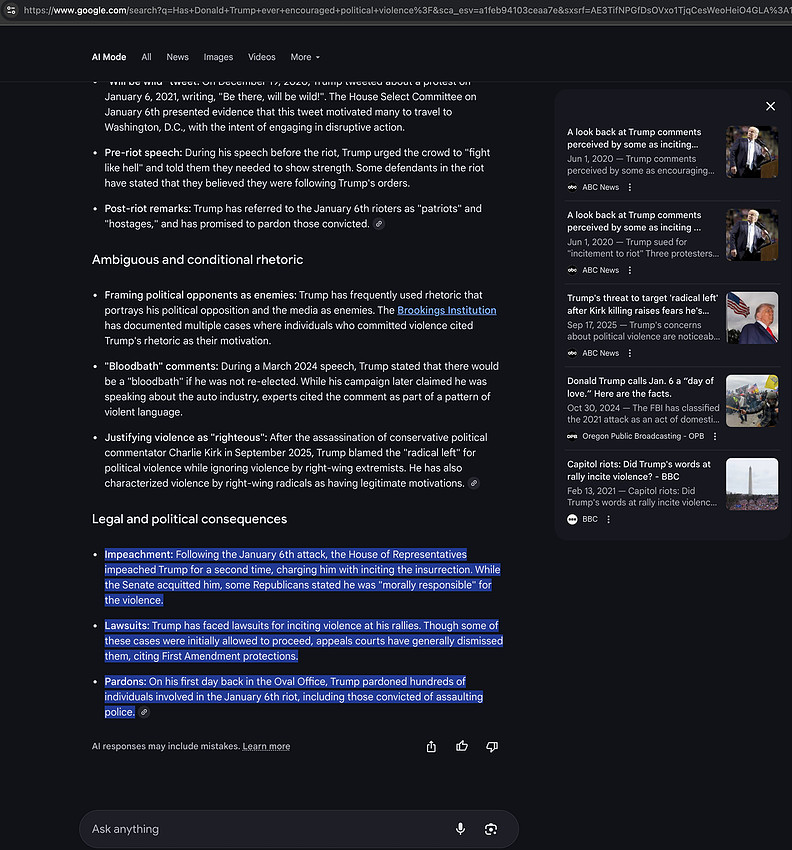
1st Google AI response
"Multiple instances exist of Donald Trump using rhetoric that has been interpreted as encouraging or condoning political violence
. He has at times both explicitly and implicitly praised violent actions by his supporters while also issuing statements condemning violence. Critics and scholars point to these comments as a pattern that normalizes violence within his political movement.
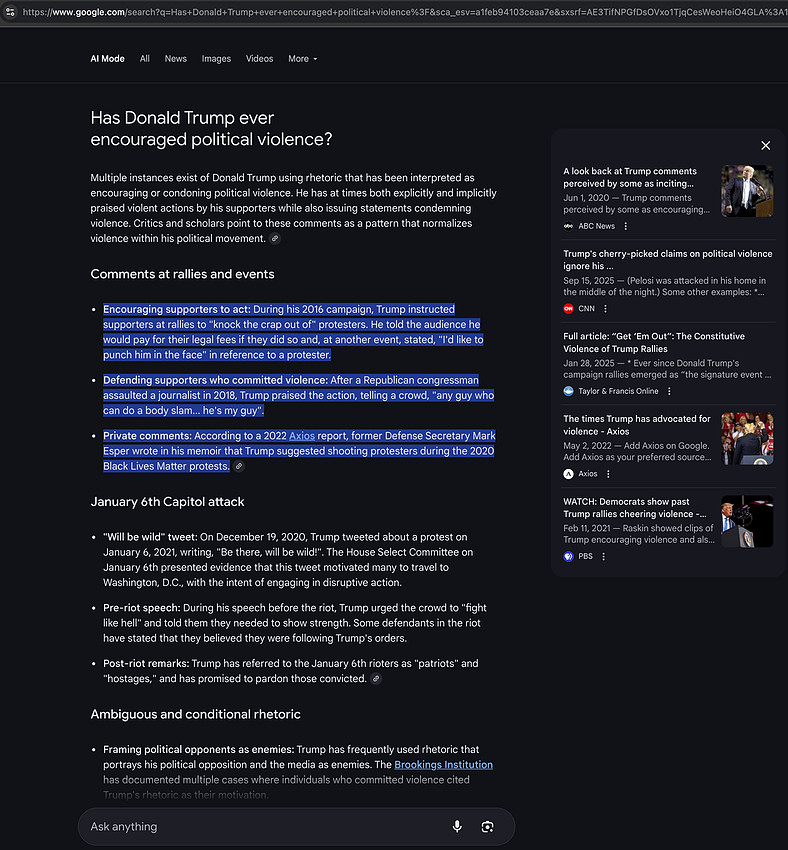
Comments at rallies and events
Encouraging supporters to act: During his 2016 campaign, Trump instructed supporters at rallies to "knock the crap out of" protesters. He told the audience he would pay for their legal fees if they did so and, at another event, stated, "I'd like to punch him in the face" in reference to a protester.
Defending supporters who committed violence: After a Republican congressman assaulted a journalist in 2018, Trump praised the action, telling a crowd, "any guy who can do a body slam... he's my guy".
Private comments: According to a 2022 Axios report, former Defense Secretary Mark Esper wrote in his memoir that Trump suggested shooting protesters during the 2020 Black Lives Matter protests.
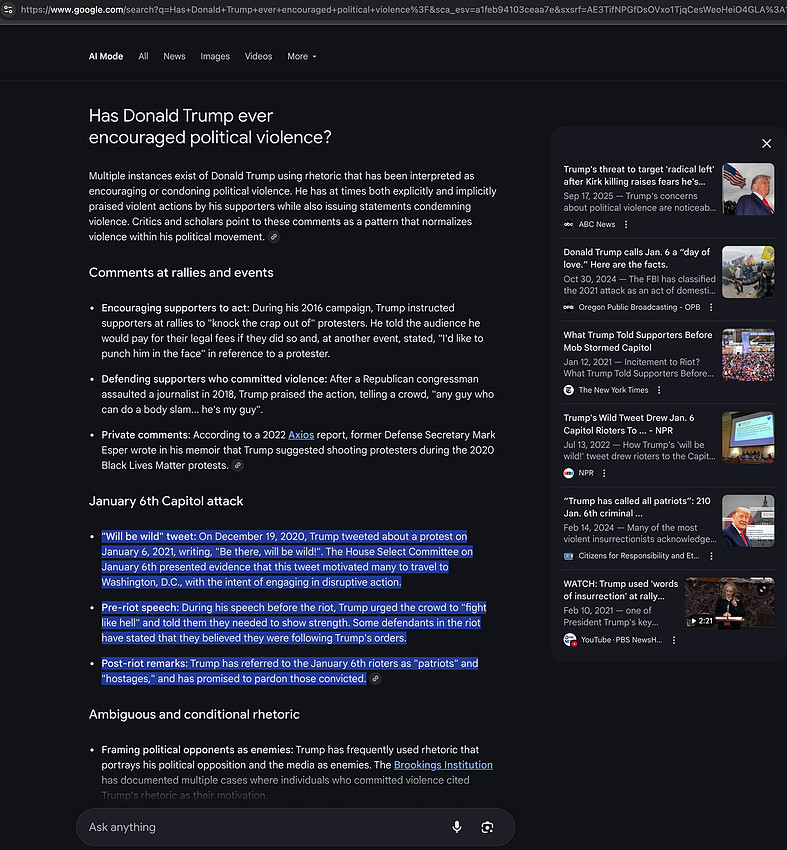
January 6th Capitol attack
"Will be wild" tweet: On December 19, 2020, Trump tweeted about a protest on January 6, 2021, writing, "Be there, will be wild!". The House Select Committee on January 6th presented evidence that this tweet motivated many to travel to Washington, D.C., with the intent of engaging in disruptive action.
Pre-riot speech: During his speech before the riot, Trump urged the crowd to "fight like hell" and told them they needed to show strength. Some defendants in the riot have stated that they believed they were following Trump's orders.
Post-riot remarks: Trump has referred to the January 6th rioters as "patriots" and "hostages," and has promised to pardon those convicted.
Ambiguous and conditional rhetoric
Framing political opponents as enemies: Trump has frequently used rhetoric that portrays his political opposition and the media as enemies. The Brookings Institution has documented multiple cases where individuals who committed violence cited Trump's rhetoric as their motivation.
"Bloodbath" comments: During a March 2024 speech, Trump stated that there would be a "bloodbath" if he was not re-elected. While his campaign later claimed he was speaking about the auto industry, experts cited the comment as part of a pattern of violent language.
Justifying violence as "righteous": After the assassination of conservative political commentator Charlie Kirk in September 2025, Trump blamed the "radical left" for political violence while ignoring violence by right-wing extremists. He has also characterized violence by right-wing radicals as having legitimate motivations.
Legal and political consequences
Impeachment: Following the January 6th attack, the House of Representatives impeached Trump for a second time, charging him with inciting the insurrection. While the Senate acquitted him, some Republicans stated he was "morally responsible" for the violence.
Lawsuits: Trump has faced lawsuits for inciting violence at his rallies. Though some of these cases were initially allowed to proceed, appeals courts have generally dismissed them, citing First Amendment protections.
Pardons: On his first day back in the Oval Office, Trump pardoned hundreds of individuals involved in the January 6th riot, including those convicted of assaulting police. "
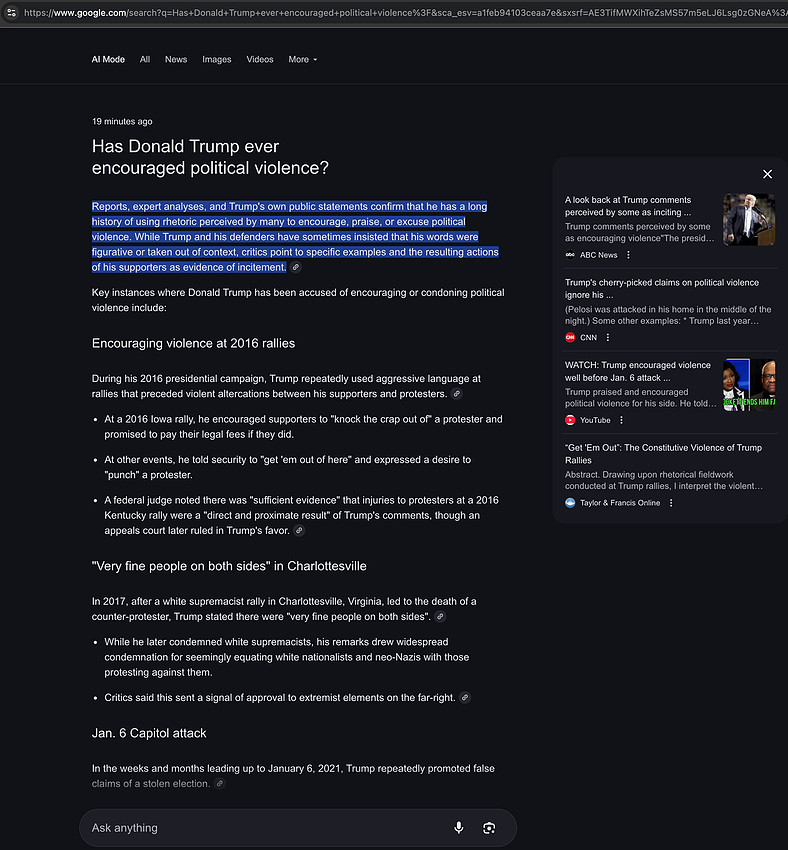
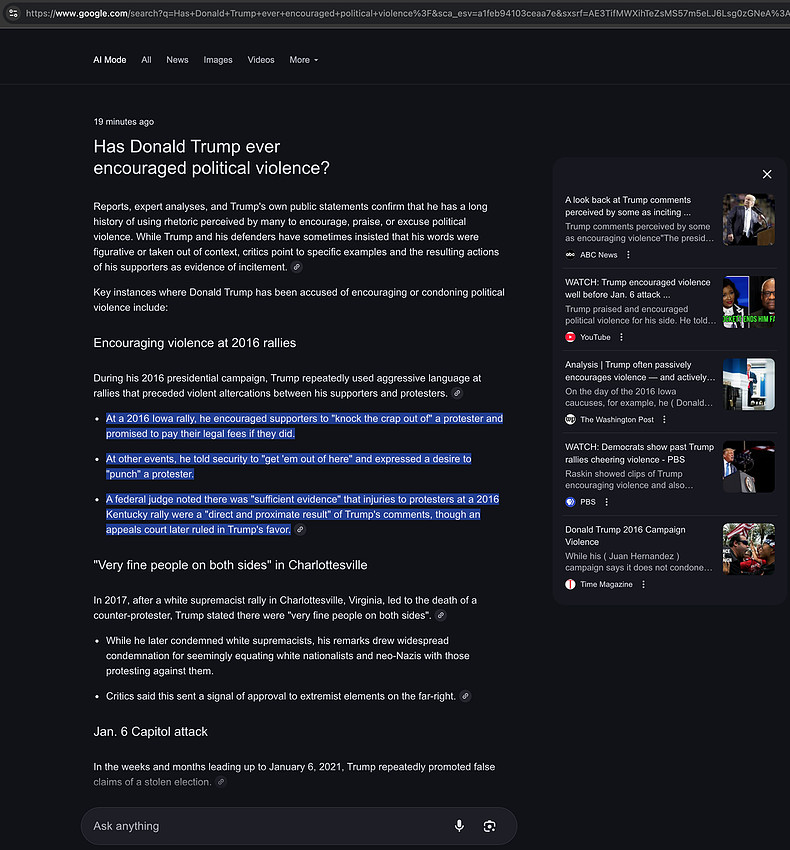
Google AI "Responds Reports, expert analyses, and Trump's own public statements confirm that he has a long history of using rhetoric perceived by many to encourage, praise, or excuse political violence
. While Trump and his defenders have sometimes insisted that his words were figurative or taken out of context, critics point to specific examples and the resulting actions of his supporters as evidence of incitement.
Key instances where Donald Trump has been accused of encouraging or condoning political violence include:
Encouraging violence at 2016 rallies
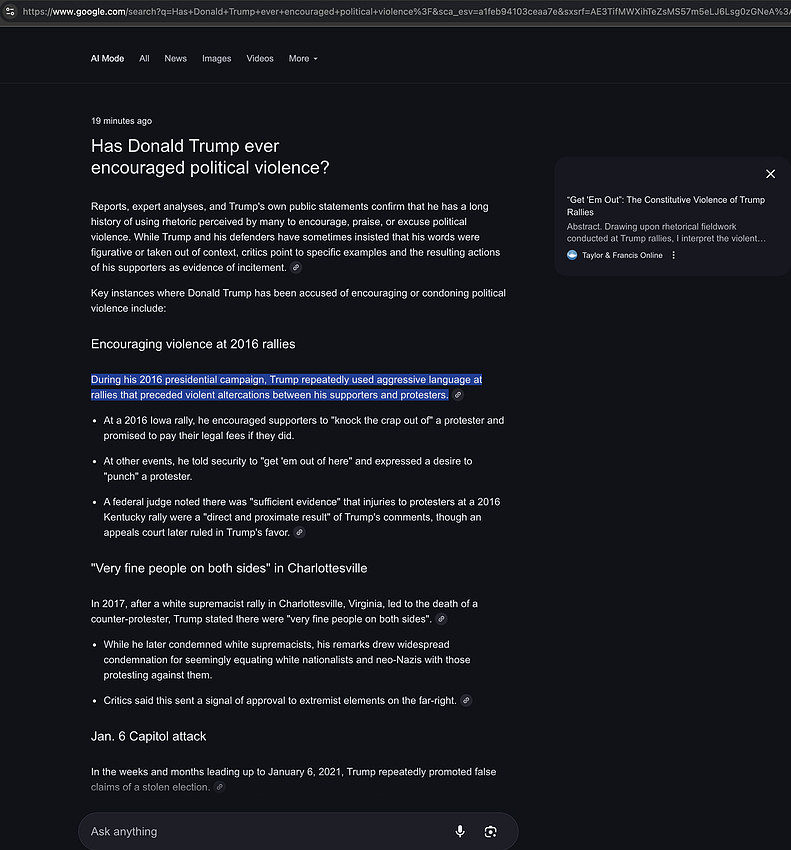
During his 2016 presidential campaign, Trump repeatedly used aggressive language at rallies that preceded violent altercations between his supporters and protesters.
At a 2016 Iowa rally, he encouraged supporters to "knock the crap out of" a protester and promised to pay their legal fees if they did.
At other events, he told security to "get 'em out of here" and expressed a desire to "punch" a protester.
A federal judge noted there was "sufficient evidence" that injuries to protesters at a 2016 Kentucky rally were a "direct and proximate result" of Trump's comments, though an appeals court later ruled in Trump's favor.
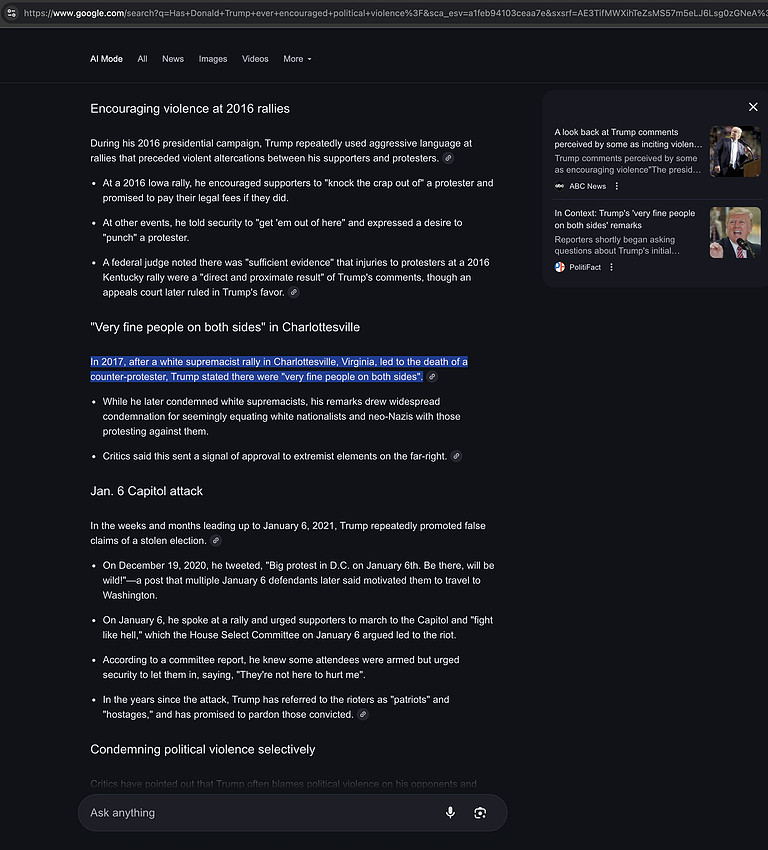
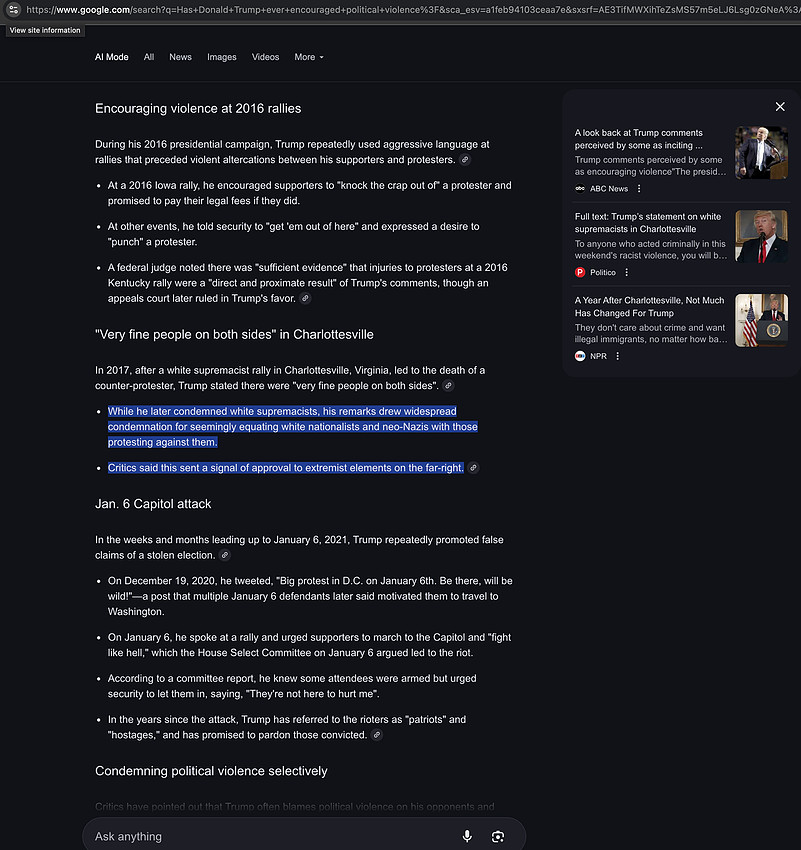
"Very fine people on both sides" in Charlottesville
In 2017, after a white supremacist rally in Charlottesville, Virginia, led to the death of a counter-protester, Trump stated there were "very fine people on both sides".
While he later condemned white supremacists, his remarks drew widespread condemnation for seemingly equating white nationalists and neo-Nazis with those protesting against them.
Critics said this sent a signal of approval to extremist elements on the far-right.
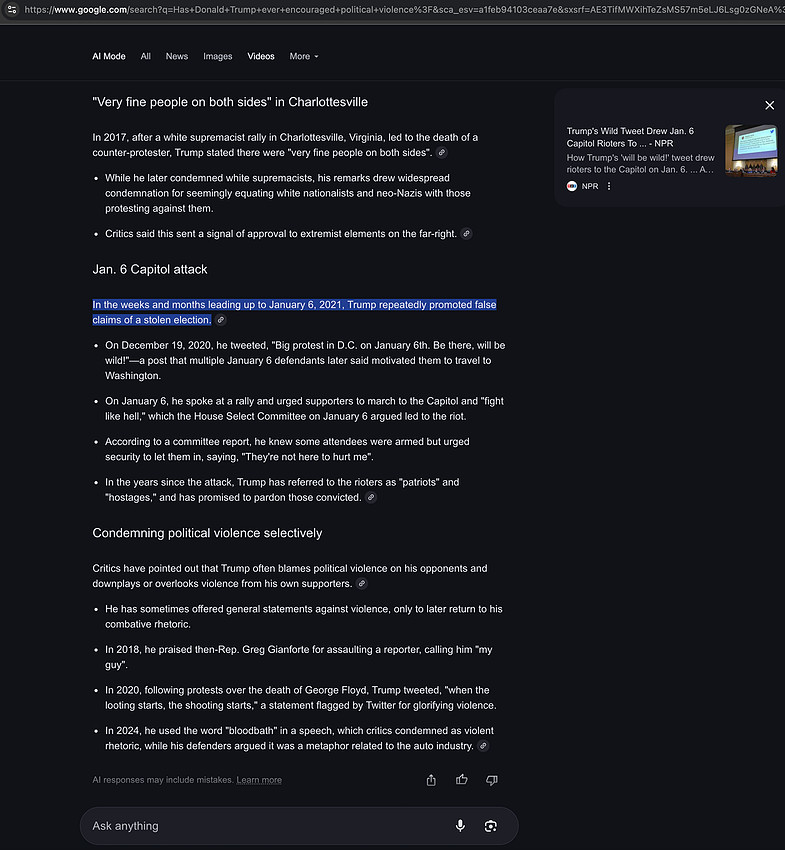
Jan. 6 Capitol attack
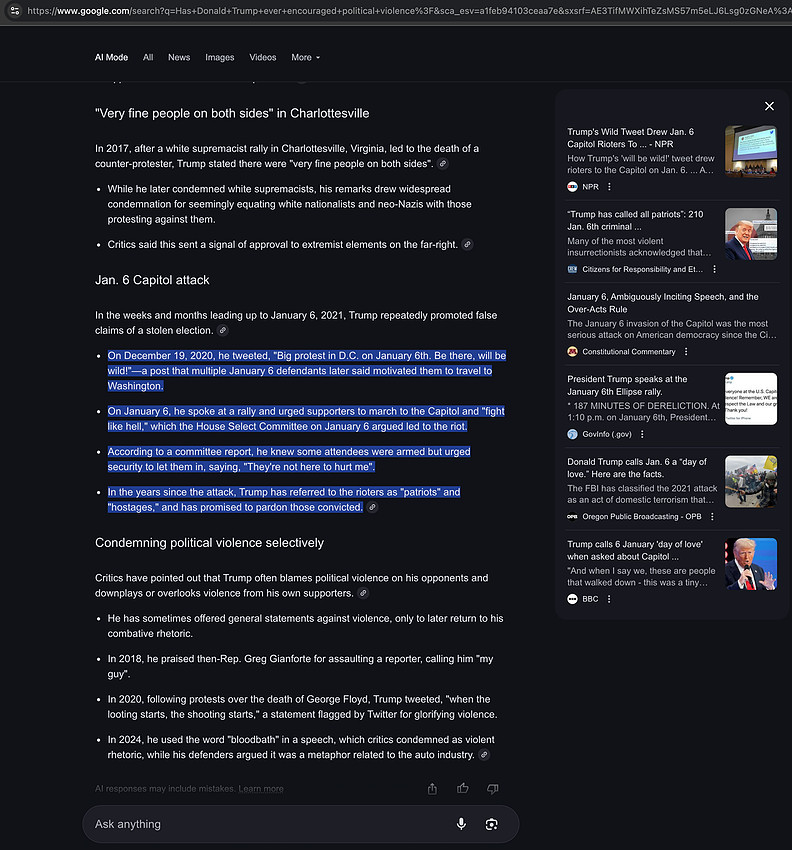
In the weeks and months leading up to January 6, 2021, Trump repeatedly promoted false claims of a stolen election.
On December 19, 2020, he tweeted, "Big protest in D.C. on January 6th. Be there, will be wild!"—a post that multiple January 6 defendants later said motivated them to travel to Washington.
On January 6, he spoke at a rally and urged supporters to march to the Capitol and "fight like hell," which the House Select Committee on January 6 argued led to the riot.
According to a committee report, he knew some attendees were armed but urged security to let them in, saying, "They're not here to hurt me".
In the years since the attack, Trump has referred to the rioters as "patriots" and "hostages," and has promised to pardon those convicted.
Condemning political violence selectively
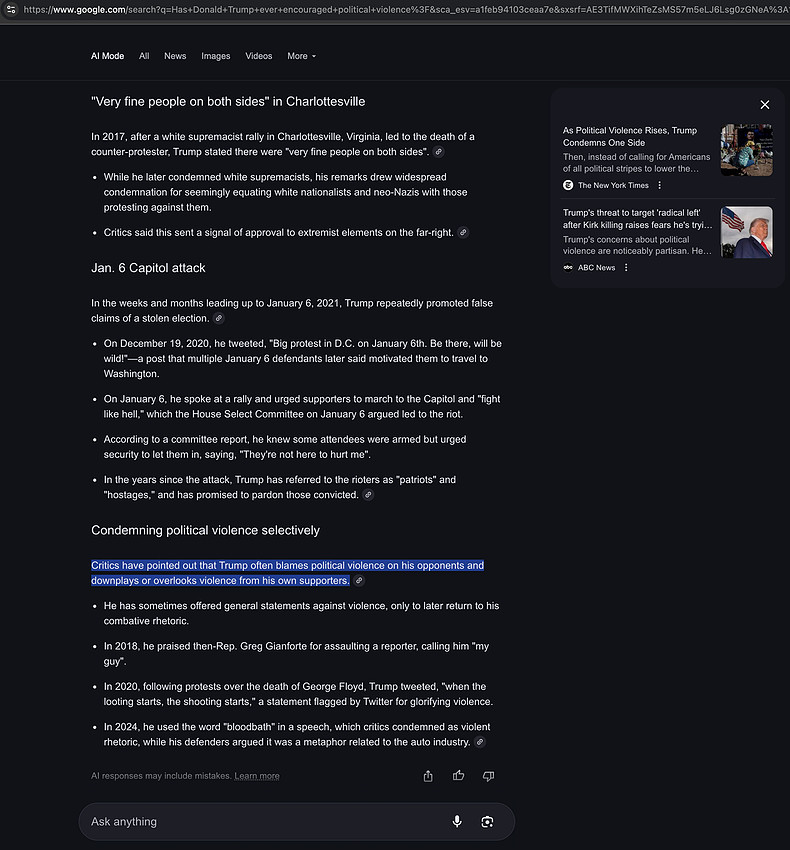
Critics have pointed out that Trump often blames political violence on his opponents and downplays or overlooks violence from his own supporters.
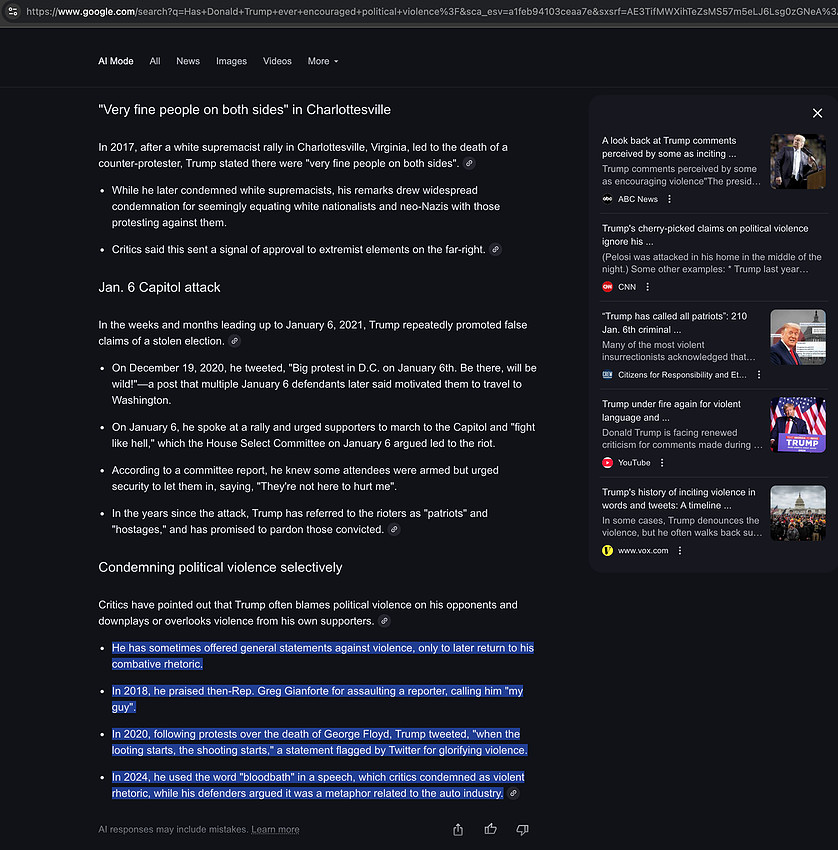
He has sometimes offered general statements against violence, only to later return to his combative rhetoric.
In 2018, he praised then-Rep. Greg Gianforte for assaulting a reporter, calling him "my guy".
In 2020, following protests over the death of George Floyd, Trump tweeted, "when the looting starts, the shooting starts," a statement flagged by Twitter for glorifying violence.
In 2024, he used the word "bloodbath" in a speech, which critics condemned as violent rhetoric, while his defenders argued it was a metaphor related to the auto industry. "